03 October, 2024

The morning sunrise!


During a visit to a hill station recently, what caught my attention was the road side scenes, where tall and widely spread out trees still offered shade for pedestrians and shelter for birds. The overgrowth on the road side even covered a large sign board !

The hay stack on the road side reminded me of the agrarian life style that is still a way of life in the villages. 


The terraced paddy cultivation was a fascinating sight to watch at day break. The paddy fields remained uncultivated in the village where Anna and I live, but the story of vibrancy with agricultural diversity as the way of life is prevalent in many parts in rural areas. 


The sights and scenes, the cool air, the quiet pace of life and the ecological stability stand out in the interior areas, when one moves away from the urban environment. 

During my morning walk I found a group of school students with their teachers, waiting at the road side, facing the hills, for the sunrise. What an applause it was from those students to welcome the sunrise! Coming from the city of Chennai, at least for some, this scene of sunrise with splash of colours on the sky was a novel experience. 

On my way back to the guest house I met a man who stopped me to ask, about the reason of my visit to the hill station. He was polite and friendly. He told me that he sells honey that he gathers from the trees in the forest. Now that the forest is gradually disappearing, he sells tea on the road side in the morning for visitors and tourists. Having finished his graduation in commerce, he was still waiting for a job to practice his accountancy skills. 

This is the paradox. The Indian economy has quadrupled the millionaires in India in the last ten years, if one report is right. And yet the unemployment among the youth in India is the highest when compared with the last forty years. 

When I returned from the hill station, what stayed with me is the sights and scenes of a hill station which has preserved its rural ambience. The people living there are also facing the adversities common to others in India-unemployment. 

I feel that the political climate in India is not youth friendly! That worries me!

When I was at school, there was provision to join college by using the loan facility which the government of India offered. One clause in that loan scholarship scheme was that if any student after completing the course were to be a teacher for five years, the loan did not have to be returned. That scheme was offered even for medical and engineering studies. What a foresight in the nineteen sixties to prepare a future generation of teachers in schools and colleges !

I wish our political leaders would catch a vision to give hope and security for young people in India!

M.C.Mathew (text and photo)


02 October, 2024

The hut in the Sevagram Ashram

Today being the day of Gandhi Jayanthi, 2 October, people in India remember the birth and life time contribution of Mohandas K Gandhi to earn political independence for India on August 15, 1947.

My memory goes back to 1976, when Anna and I worked at the Mahatma Gandhi Institute of Medical Sciences, Sevagram for about two years. Among other things, one reason we chose to work in that institute was because, its founder Dr Sushila Nayyar, who was the personal physician of Mahatma Gandhi during his stay at the Sevagram Ashram, was still in the faculty. At that time, she was the director. The institution was into its tenth year when we went to work there. 

We lived in the college campus where the accommodation was comfortable and was close to the Men's and Women's hostels. We had an active association with the student community. I worked in the community Medicine department, headed by Dr Sushila Nayyar. Anna was a research associate in the Pathology department. 

Dr Nayyar was the health minister in the ministry of the first prime minister of India, Pandit Jawaharlal Nehru. She was a devout Gandhian in spirit and practice. She had a small cottage in the campus, where she met with the faculty, students and visitors. She sat on the floor and transacted her work each day. Going to meet her was a special experience when one sat on the floor and felt surprised by her hospitality and courteousy. I remember some faculty went to meet her to receive her hospitality and have conversation about her association with mahatma Gandhi for about 25 years.  One returned after meeting with her admiring her wisdom, enthusiasm,  interest to listen and interact. She conveyed a youthful spirit even when she  was in her early seventies.

Let me recall three significant memories I have of her during my conversations with her.

First is about what she mentioned about the first Prime Minister of India. He was a keen listener to his ministerial colleagues and was an encourager to each person, even for a small initiative that a minister person took in any direction. He was a consensus builder and consulted people widely including leaders from other political parties. He listened to his critics earnestly in order to discern political truth that was deeper than his sense of perception. It was he who assigned the responsibility to Sir Joseph Bhore, to plan for health planning policy.  The Bhore Committee repost formed the foundation for starting primary health care in India with a vertical alignment to secondary and tertiary care. The creation of the All India Institute of Medical Sciences at New Delhi was a strategic step to set high standards in medical education. 

The second was about some of the habits of Mahatma Gandhi. His long prayer times in the morning and evening formed his inner sense of purpose. He would invite all others around him to join in prayer. There were times he would go into solitude for two or three days, often while fasting, when some major decisions were before him. He articulated and practiced love, non-violence and tolerance. On one occasion when there was a quarrel in the village he went on a fast which made the opposing parties came to negotiate with him. He sought for peace at any cost. 

The third was about the influences others had on the life and formation of Mahatma Gandhi. Rev C.F.Andre was one such person with whom Mahatma had regular conversation on spirituality in politics. The conversations between them would often start by reading passages from Scriptures. One favourite passage that Mahatma often read jointly with Rev Andrews was the sermon on the Mount of Jesus of Nazareth. Dr Nayyar recalled that during the public prayer meetings Mahatma referred to the Beatitudes to advocate for mercy, peace and purity of heart. The prayer he recited to close conversations with her and few others was the Lord's Prayer, Jesus of Nazareth taught His disciples. 

It was during one such conversations,  Dr Nayyar encouraged me to train in community paediatrics as I was already into community health. I remember several conversations with Dr Nayyar, who according to her Gandhian values, chose to live an austere and self giving life to promote the prospects of developing the Medical College to train doctors to go to work in rural areas. At that time MGIMS was the only medical college in India located in a rural area. 


The village of Sevagram was a large village with a population of about 20,000 people, nearest town being Wardha, eight kilometres away. Anna and I were regular visitors to the Sevagram ashram, which was founded by Mahatma  Gandhi, in 1937. He arrived in the village on April 30, 1936 and wanted to have a place for him and others to live, from where he was going to take the freedom movement forward. One of his associates, Ms Meera Ben was already living in the village at that time. Mahatma Gandhi was 67 years when he arrived at Sevagram.

The hut below where he lived, which we noticed at that time, was full of personal belongings of Mahatma Gandhi, including the religious books he read. The chakra  he used to weave cotton thread, as part of his daily routine, was another article of significance in his personal collection. He promoted self reliance as a philosophy by popularising to use hand spun clothing. 


Later more buildings and open spaces were created for prayer meetings and for people to stay during the freedom movement. It was from this place Mahatma Gandhi initiated the sataygraha movements.The  photo below of the hut is a later one  showing how the ashram developed with other facilities for more people to stay and gather for prayer meetings. 


Anna and I remember a few things about the Sevagram ashram. It was Mahatma Gandhi who took the initiative to create access roads within the village through 'shramdan'.  People contributed time voluntarily to do manual work. It was one village where good sanitation facilities and potable water supply existed at that time. 

With the faculty and students encouraged to wear hand spun clothes and eat vegetarian food, the good traditions during the pre-independent time were remembered. 

The sense of belonging to a community was palpable in the college life and in the residential campus. There were several activities among students and faculty to promote mindfulness towards others. 

As students came from different strata of society, mostly from rural areas,  half of the students from the state of Maharashtra and the other half from the rest of the country, the emphasis on following a simple life style befitting the real life in a rural area was a healthy emphasis. Although a minority resisted it, the ambience in the college and hospital  promoted service as a vocation. 

A class mate of mine at Nagpur, Dr Ullhas Jajoo was a consultant in Medicine and Anna and I had lot of contact with him and his family. 

It was from Sevagram I moved to Medical College, Nagpur for my further training in Child Health in early 1978. 

Anna and I carry memories of friendships, experiences and family life during our time at Sevagram. It was while we were there Arpit was born. His addition to our family brought us to the experience of getting familiar with the vocation of parenting. The student friends who came to meet us during that time were thoughtful in many ways and we had occasions to have formal conversations about the vocation of medicine, as a calling to serve and care. 

On this Gandhi Jayanthi day, Anna and I remember that experience of being in Sevagram to gain a glimpse of living a simple life and stay aware of the needs of others. 

We remember Mahatma Gandhi and hope that the values of service, mindfulness, austere living and participatory governance would stay on as the features of our democracy in India.


Mahatma Gandhi was a large tree, offering plenty of space and provision for other trees to grow!

M.C.Mathew(text and photo)


Alone, Lonely and Solitude


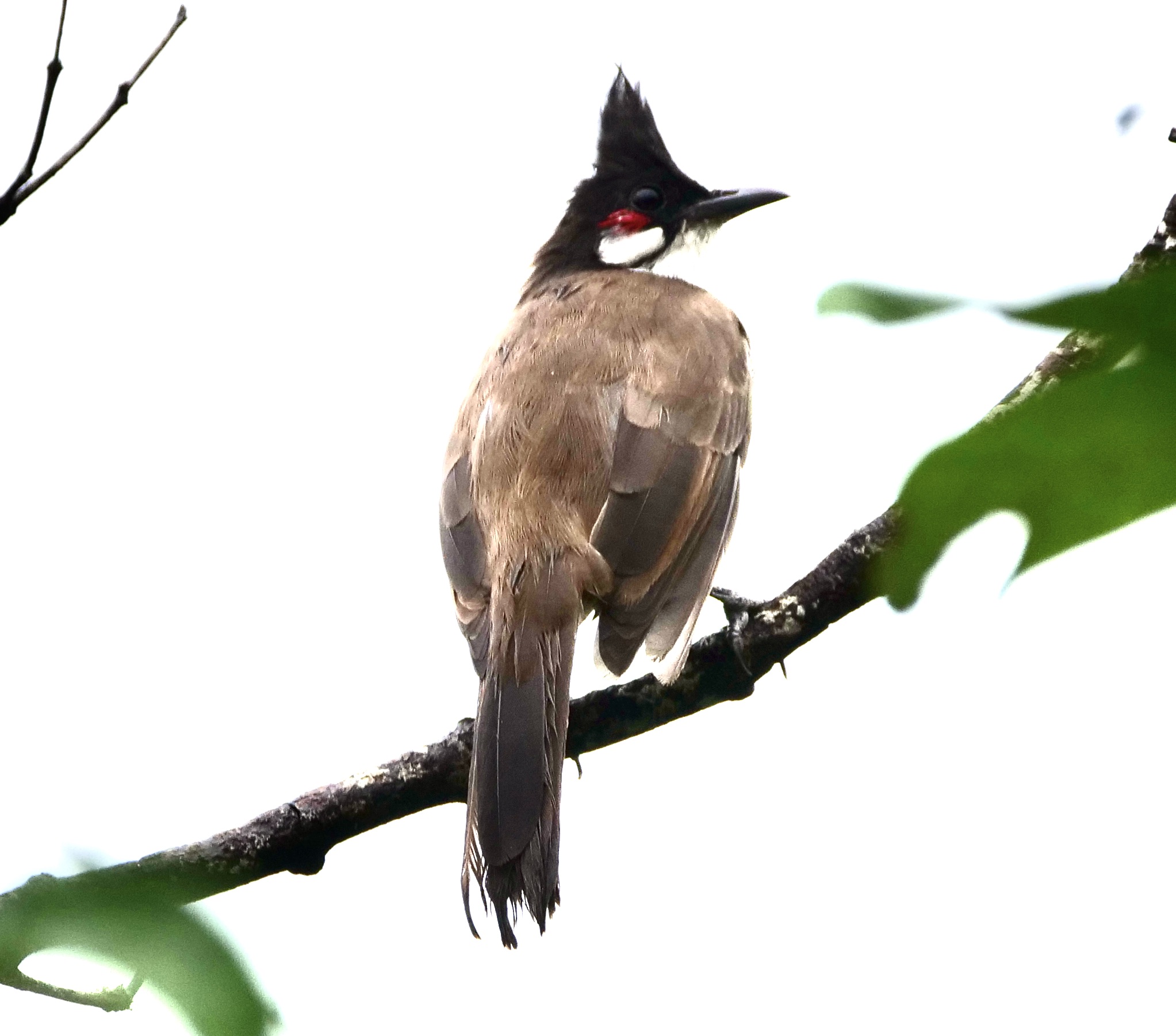
One of my interests while tracking birds in the garden where Anna and I live, is to look for birds who are alone in different places in the garden. 

These five birds above, were all by themselves in different places in our garden. Al these photos were taken, at day break when light conditions were not appropriate. 

I kept waiting at these sites as what might be the next move of the birds. All of them did not stay in the site beyond five minutes.

When a bird is with its pair or are in a group they stay longer in one site. They hang around and explore the environment. 

I received a telephone call from a person, who was finding the experiences in his new work place difficult and different from expected. He said, 'I feel lonely even when I am with other people in the office'!

Some people choose aloneness and some others end up being lonely. They are two different experiences. 

Aloneness is an experience when a person chooses privacy for various reasons. I know of people, who are in transition in their personal life,  withdraw from intense socialisation and take time to process the events in one's life. Some would find the environment intimidating or inconsistent with his or her inner orientation that he or she is more comfortable with being alone. Such people once hey find like minded people would feel comfortable to be more sociable. There are some for reason of reflection or introspection who would take a lonely path to find space to travel inward. I know of people who choose aloneness for spending time in meditation and inner encounter experiences to revise life. 

There are others who for various reasons become lonely. His or her longing its to be relational, but for some reason that does not happen. May be a person is uncomfortable due to a personal upheaval.  He or she ends up being lonely, as others around do not take any efforts to reach out, due to the weak asocial signals that person sends out. Another common reason for loneliness is on account of discord arising out of broken relationship or a conflict. A depressogenic orientation, can push a person to a pathologic state loneliness which needs attention. A person having lived well adjusted can suddenly withdraw and experience loneliness. Such situations can lead people to other behavioural maladaptations.

Being alone by choice is a healthy experience if it is associated with a creative purpose. 

To feel lonely is an undesirable state, which I hope we can discern and respond to. 

I do come across teenagers, just retired people, senior citizens and people experiencing marital stress talking about loneliness. The teenage loneliness as much as possible ought to be addressed as an emergency state, lest it leads to other behavioural consequences. 

A personal rhythm of physical exercises, playing, conversations, reading, pursing hobbies and taking time to engage in personal developmental activities are some of  the ways, most people who are vulnerable to stressful situations engage themselves to feel well. A proactive approach to feel insulated from a lonely feeling is essential for those who retired for active work. It is when we can think about others, feel for them or be involved in being a support to others, we would feel connected with our lives with others. 

Most single birds might remain alone for a season, but not lonely as they regularly visit places, where they come across  other birds.  

A husband and wife run a multipurpose shop in my village. When I went to the shop yesterday for some purchase, the man told me that his wife could not come to the shop for three weeks. He felt alone and his wife also felt similarly while being at home. He said, 'when we are alone, we feel even more for each other'! What a statement of truth! The bliss of presence and the blessing of absence!

Re Dr Henry Nouwen in the book, Seeds of hope, introduced a journey we can make from loneliness to solitude (p12-13 ). 'Instead of running away from our loneliness and trying to forget or deny it, we have to protect it and turn it into a fruitful solitude'.

Aloneness, loneliness and solitude might have one thing in common- each of these experiences can lead us to an 'experience of' solitude which begins with time and place for God and God alone' !

I sometimes wonder, whether the birds in our garden got it right to be alone but not lonely, better than me!

A single bird, but singing for others!


M.C.Mathew(text and photo)

A Wasp and Spider!

 Spider

I have only occasionally noticed a Blue Mud Wasp in our garden. As they are not commonly seen elsewhere in the world, I have had doubts if it can be something else. That debate in my mind is not yet over. 

In the recent weeks since the jasmines are flowering, there are a few of them, who search for nectar in the bud stage of the flowers. 


I look out for these spiders, one of them above, which are small and are often missed, in the jasmine, and rose flowers recently. They can be sometimes seen in other flowers as well. 

For a while, I missed seeing them. 

The culprit is the Blue mud wasp, whose preferred meal is spiders. In fact, they eliminate the Black widow spiders which are poisonous from the garden. The blue wasp feed their larvae with spider while they thrive on honey to receive energy to fly long distances. The wasp sting the spider to immobilise them and make a feed out of them. 

What was even more  intriguing is the tendency of the buds of jasmine falling off before they bloom. Has it got something to do with the Blue wasp feeding on the buds! 


At the end of a walk into the garden, one wonders about the several silent equations in nature which balance the setting for the wellness of humans. 

Noe that I found out form my current search that Blue mud wasp are fun near the spider web, it gives me another reason to be more observant of the spider web. 

What stays with me the colour of this wasp, blue with a sheen of black! Beautiful to look at!

M.C.Mathew (text and photo)


A dream and its movements within !


I have three images in my mind when I think of dreams which appear during the Rapid Eye Movement sleep. 

The first image is that of the birds perched on a bare tree, noticeable at day break. The darkness, bare tree and just visible birds create a feeling of vagueness, although facts and realities are hidden in the dream representing an actual event that happened in the past. Such a dream may reveal insights not explored thus far or bring in a connection that would bring freedom or suggest an action to move forward. Some suggest that such dreams are pathfinders when one remains baffled by events that happened. 

The second imagery of a dream is that of a bird perched in a foliage, moving in wind, when the clouds are gathering and the sky is dark, threatening of a rain or a storm. A dream can be such an experience of an emotional upheaval, with vivid flashing of memories of events and experiences associated with real stressful events or imaginative events. It leaves a person disturbed although the dream can bring an effect of catharsis. The meaning of different events associated or disconnected would become clearer when one prepares to do a 'dream work' with a self directed questionnaire or by receiving assistance from a person who follows the prescribed pathway to demystify dreams. 

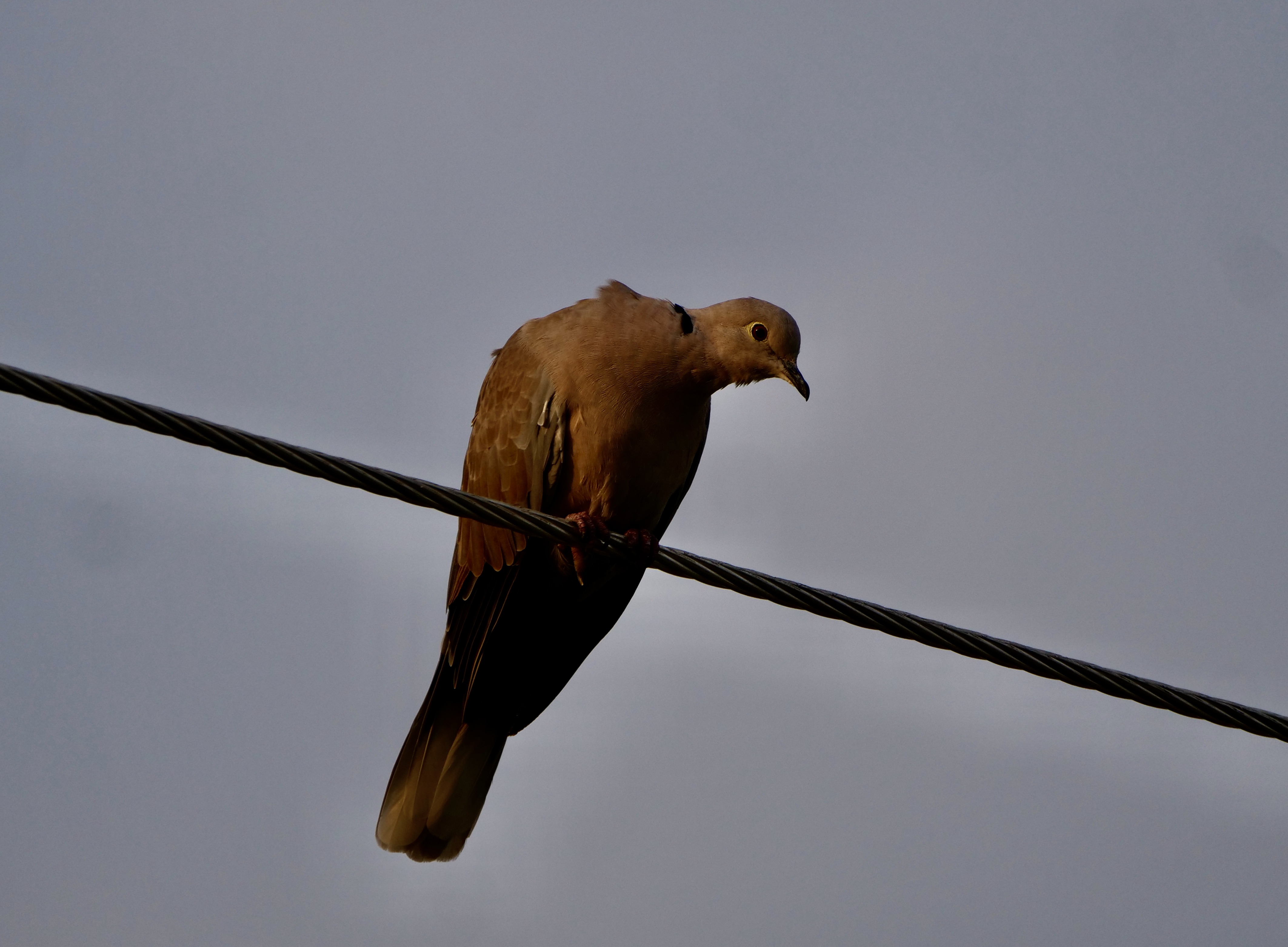
The third imagery of a dream is that of a bird perched in a cable in the darkness of the night and twisting its body in distress over a dream that was frightening with gory events that could not be easily connected. The effect of such a dream can be an inner turmoil with which one gets up and would stay awake unable to go back to sleep. The dreams of such a nature might have a warning or a revelation to act upon. Such dreams also would help us to connect with emotions concealed in our subconscious mind, that remained unattended or avoided to engage for fear of reliving a difficult seasons. 

In all the three structure of dreams mentioned above, known by different names or psychological phenomena, one thing is common. The dreams represent actual events or imaginary thoughts that stay wandering in our subconscious mind. Sometimes dreams surface when we carry in our thoughts an event that was over or is yet to take place .  

Those of us who have got used to revisiting our subconscious mind through the door of dreams offer us, would find that it is an ongoing activity in our life. Most of us dream every night. Only few dreams can be recalled. Those who write down their dreams or recall the story immediately after the dream to get the details assimilated to remember later, would find the substrate in the subconscious mind as a resource to work on to make sense of a dream. Often the larger meaning of a dream would keep building up within, only when we have a few recollection times with leading questions to make progress in the unfolding of a dream. The recollection of dreams which are instructional, revelational or prophetic can be upbuilding to form our inward terrain of consciousness with more integration. The dreams reveal our dichotomy and is therefore facilitatory to revise our lives and renew our optic and consciousness.

I went to sleep yesterday thinking about a visit I have to make to an office, to link the domestic gas connection to the telephone number and Adhar registration, in accordance with a new government policy.

Sure enough I had a dream with details from a few events of being in different offices, appearing in a cluster. The difficulties encountered and long waiting with not so kind attitude of others surfaced. Amidst that a few people propped up as those who went out of their way to help. 

I feel anxious about going to an office as the priority to those who wait in the queue is not certain. Often one gets the work done if there is someone you already know in the office. However, this impression from my early adult life is not true today. In the recent years the procedures in the offices are lot more streamlined and one does not have to be anxious like the way I feel. 

The first message I picked up from my dream yesterday is that I carry anxiety about going to an office to get any work done. This anxiety has delayed a prompt action from me about going to offices to get some work done related to our property. 

The second message is the help I received at critical times when someone  came forward to help and resolved the stalemate. Often such a nature of help happened on a few occasions that I ought to be less anxious about going to an office. It brought to my consciousness about the habitual attitude within me, which needs revision and replacement with a sober attitude towards an office and people working there. 

The third message is to be open about what might happen rather than view events through the optic of the past. The memories of the past which were difficult seem to linger on in the subconscious mind longer. That calls for regular audit of the subconscious mind by a structured approach of 'inventory' of memories. The catharsis of the subconscious mind brings release to thoughts we hold on to or opinions we feel strong about. The cluttered subconscious mind becomes a highway, open and abundant with freedom and space. 

The Fourth message was to grow in the graciousness of remembering people thankfully, kindly and appreciatively. I realised that I tend to hold others as prisoners in my subconscious mind as  they did not fulfil my expectations. I felt sad that I keep thinking of some people in a disapproving manner and therefore stay stuck in the past. That is another journey that this dream exercise is doing to me. 

The fifth message is a sense of gladness that dawns on me about the prospects of change, such experiences can bring into my life. The photo of a bird against the bright blue sky below,  gave me an inspiration about creating another 'dream' within. The dream therapy has one step where a  person is enabled to choose some dreams of choice! 

One can condition the subconscious mind to stay disciplined to live with pleasant memories, cheerful recollections, sober thoughts towards others, and a prayerful orientation to feel anchored in God, 'in whom we live, move and have our our being'!


I begin this day with choice of some pleasant memories to dwell within and allow them to sink into my subconscious mind. The ambience of the subconscious mind is in my domain of control. It is when I can reorientate the subconscious mind with passages from the Scripture and prayers of healing and wholeness from prayers of others, one can create a righteous and just ambience within. 

If our 'body is the temple of God', our interior life including the subconscious mind is a sacred place. Its sanctity is conditioned by 'renewing our mind by not conforming to the mindset' that prevails around us. 

In the book, Living into Focus, Arthur Boers, introduced a theme (p22), Embarking on a Focal pilgrimage. " Embarking on focal living is not about 'oughts' and 'shoulds'. There are many ways to incorporate  focal priorities. Seeing others live out such commitments is suggestive and disclosive. Pay attention to the focal practice of others and you will see something and think, 'I do that or I could do that', or 'That reminds me of doing such and such' ....Many in our congregations are not aware of the deeper meaning of what they are doing. One gift we can give them is to show them, this is really significant..."

The above paragraph is about living mindfully of others in receiving and giving. We help each other and that brings the gain of new consciousness. All of us are co-pilgrims on our way!

Our life can be an ongoing life revision when we live open to others and receive their insights and reflections to explore the terrain of our being, where we are now. How interconnected we are if only we can live aware of this.  

An open flower----its openness is its habit!


M.C.Mathew ( text and photo)
 

01 October, 2024

When a question becomes a quest!

The first part of my exploration at the feeding station after the monsoon receded, started about three months ago was: how to help Bulbuls and Barbets to feed together. That took about six weeks of different experiments. 


One way I could facilitate that was by distributing fruits in three plates so that they did not have to crowd around one bowl. The Bulbuls arrived earlier than the Barbets and if they were given enough feed, they were less intrusive when the Barbets  arrived. 

The Barbets are gregarious by nature and would take large chunks of food at one time and would fly away sometimes with one banana. 


The Bulbuls feeling threatened by this was partly overcome with more food spread out in three plates. The Bulbuls were happier if they found food in the evening time as well. 

The next plan was to let the Barbets and squirrel feed together. The squirrels avoided Barbets. 

I watched a squirrel wanting to feed from the feeding bowl.  Mostly the squirrel came when there were no birds around. 


The photos below would give a narration of the sequence of the  experiment of how a squirrel got familiar to feed with Barbets. 

On one occasion in the morning, I watched a squirrel making its decent towards the feeding bowl, slowly, taking extra caution to watch the reaction of the Barbet. In the following five photographs, there was one Bulbul next to the Barbet, which might have prompted the squirrel to take a chance. Bulbuls are comfortable with squirrels.

When the Bulbul moved away, the squirrel and the Barbet were alone. The sixth photo below is the turning point in this interesting sequence of a squirrel learning to co-feed with a Barbet. The squirrel with its tail flexed over its body, which might be an indication of anxiety or stress moved towards the edge of the bowl, in attempt to move to safety, when one Barbet alone was present. 

At this juncture another Barbet arrived. Now the squirrel was between two Barbets and the squirrel relocated itself in the bowl! However the tail of the squirrel was flexed over its back still indicating anxiety or stress. 

To have been able to see them together was a message that the squirrel and the Barbets have a different equation now. 


However that did not fully resolve the conflicting behaviour between Barbets and squirrel. That could be resolved, by having a plate of millets and nuts that squirrel would feed on, which the Bulbuls or Barbets were not fond of. 

The anxiety of not getting enough food to feed on, was removed as a reason for stressful and intimidating behaviour between birds.  


Now the feeding station is a place where the regular birds and squirrel have got used to share and communicate around the morning meal.

The squirrel which normally had enormous fun chasing Myna between branches of trees looked settled in the last photo above to co-feed with a Myna.  

Now it is considerably less to see birds who are residents or regular  visitors in the garden,  chasing each other during the day. The feeding time behaviour settled suspicion of each other and the far of denial of food. 

This is a story of helping birds and squirrel to receive each other and belong to be more fraternal. 

While the above experiment was going on to foster peace between birds in our garden, the aggression by Israel and Russia were continuing to put the future peace process in the world under the auspices of  the United Nations Organisation  in serious dysfunction. 

I happened to re read some chapters of the book, Wisdom At Work, the making of a modern elder by Chip Conley. 

Usually people of my age are referred to as the elderly. The suggestion of the author about being an elder fascinated me. "It is time to liberate the term elder from the word elderly. Elderly solely refers to years lived on the planet. Elder refers to what one has done with those years. Many people age without synthesizing wisdom from their experience. But elders reflect on what they have learned and incorporate it into the legacy they offer younger generation...Society has historically been dependent upon our elders, who have been of service to the young" (p12)

When Chip suggests that "teaching and learning are symbiotic" (p100),  the role of an elder is redefined to be in the learning edge. All learning starts by a question. "The root word of question is quest. And through the process of reflection, every question can be a quest, a journey of self-discovery, the facilitator of a sojourning uncharted territory". 

The proposal Chip made that all questions ought to lead to a quest, an appreciative inquiry, clicked with me. "Human systems grow in the direction of what they persistently ask questions about, and this propensity is strongest and most sustainable when means and ends of inquiry ar positively co-related" (p98).

Chip while commenting about Socrates suggested that he turned "the act of inquiry into art form, played the role of a perpetual student and modelled it for his younger mentees. He blurred the distinction between who was learning and who was teaching and, as such, he appeared less like the wise old man, but more like a mature, fully baked version of what his young students aspired to be"(p99).

I closed my years of work in Child development a year ago. Now, ordinary events taking place around me become a quest to discover, describe and celebrate.  

Why birds and squirrel quarrel over food was a quest, which at the end of three months is less of a mystery than before!

What a calling it is to be at the edge of learning to become an elder!

M.C.Mathew (text and photo)


Avians at day break


The first bird at day break in our garden often is a Tailor bird. Perched on the tree, around which the feeding station is located the Tailor bird breaks the silence of the morning with its tuneful singing. That is a call for birds to trickle in to the feeding station. 

The pictures above one morning when this ritual takes place tells its story- a celebration of avian behaviour. The birds got used to a squirrel coming regularly for its wrong feed form the bowl. 

The Tailor bird does not feed on fruits. Its role is to call out birds to come! In that sense it is a giver and not a taker. 

I feel how birds show a giving  behaviour during this feeding time. They wait for their turn and make the feeding time a 'conversation time' between themselves. 

The last two photos of the Bulbuls waiting till the squirrel finished its feed was a message of that social harmony the birds demonstrate at the feeding station. 

The election pitch in the United States of America is adversorial between Mr Donald Trump and Ms Kamal Harris. The Israel initiated aggression is the Middle East area is alarming to say the least. The changes in the political leadership in Sri Lanka and Bangla Desh would cause some ripple effect in regional balance of power.

The climate in India with  few states going for election is pathetic. The  political parties have resorted to use language to hurt and dominate. 

Every morning when I find another language of regards towards each other in the feeding station, I feel that peace is the language inherent to most species. It is provocation which makes some behave aggressively. 

I find this morning celebration of ritual of peace, a fascinating and hope generating experience!

It is mutual regard that upbuilds wellness among all of us. 


M.C.Mathew(text and photo)